
7 Years Running: Atmosera Renews Its Azure Expert MSP Designation

Atmosera has once again cleared the Microsoft Azure Expert MSP audit, maintaining the designation for a seventh consecutive year. The designation matters because it must be earned again every year. […]
Microsoft IQ: When context becomes the advantage

Many AI projects fail for one simple reason: the model does not know the business. It may have billions of parameters, but if it does not understand your customers, contracts, […]
Heavy Industry’s Path to Hybrid Azure: Governance, Visibility, and Compliance Without Compromising Operations
A practical implementation path for hybrid Azure without introducing unacceptable operational risk Executive Summary Heavy industrial organizations should not approach hybrid cloud modernization as a migration exercise. The goal is to […]
Azure: Grids, Hubs, Busses, Topics, and Queues… Oh My!
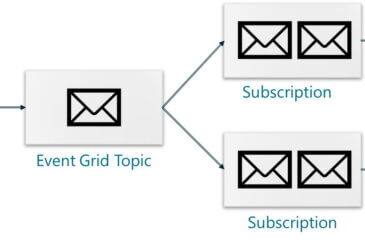
Messaging between application components and devices is why engineers invented computer networks. The ultimate computer network is the Internet, which has practically connected all the world’s devices to a single network where any one device can send a message to another device.
Data Augmentation
My previous post demonstrated how to use transfer learning to build a model that with just 300 training images can classify photos of three different types of Arctic wildlife with 95% accuracy.
Transfer Learning
My post introducing convolutional neural networks (CNNs) used a dataset with photos of Arctic foxes, polar bears, and walruses to train a CNN to recognize Artic wildlife.
Pretrained CNNs
Given a set of images with a relatively high degree of separation between classes, it is perfectly feasible to train a CNN to classify those images on a typical laptop or PC.
Convolutional Neural Networks
Computer vision is a branch of AI in which computers extract perceptual information from images.
Text Classification with Neural Networks
It’s not difficult to use Scikit-learn to build machine-learning models that analyze text for sentiment, identify spam e-mails, and classify textual data in other ways.